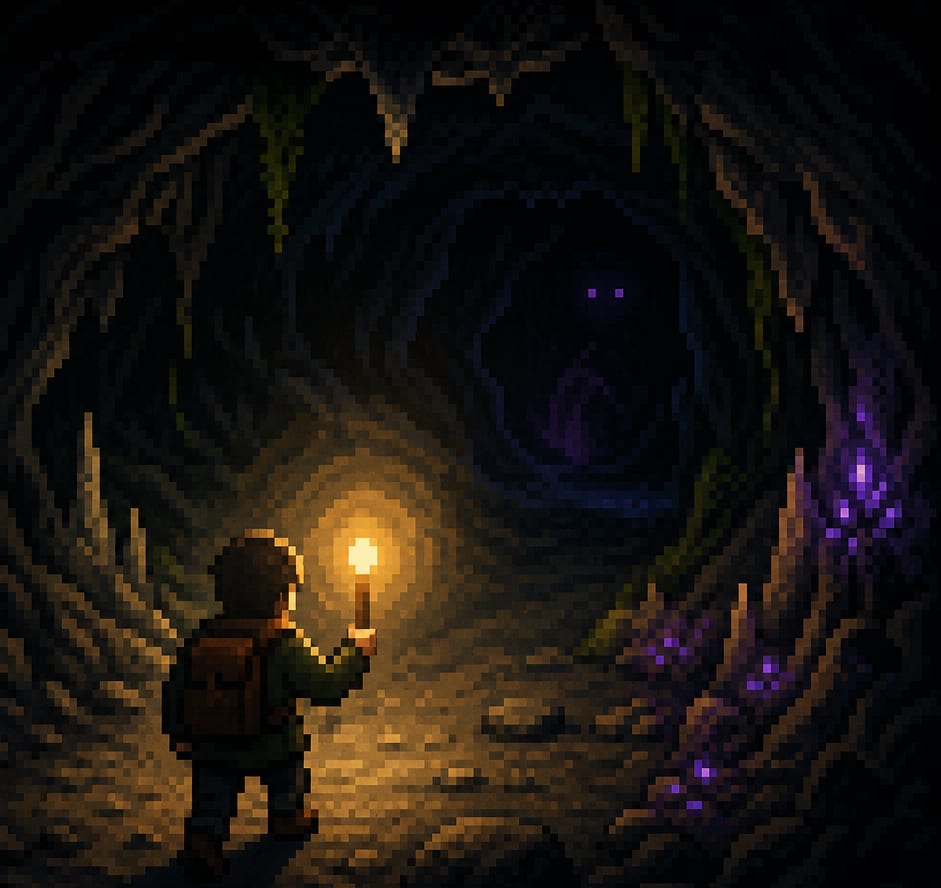
She could see the light from the cave entrance.
The colors, the warmth, the music of the elves beyond the threshold. Not ignorant of it. Not far from it. Close enough to feel it, to know exactly what it was, to understand that it was better than where she stood.
And she stayed in the cave.
This is the most painful form of stagnation — not ignorance but awareness without movement. The person who has no idea their life needs changing is in a difficult position. The person who can see exactly what would help them, feel its warmth from where they stand, and still cannot make themselves step toward it is in a different kind of suffering entirely.
How the Cave Becomes Home
Nobody chooses the cave deliberately.
The cave was the response to pain absorbed at an age when there were no better options. When the environment was dangerous and the darkness was the only available protection. The cave did not feel safe because it was good. It felt safe because it was known — and known, repeated across enough time, begins to feel like home.
"She could see the beautiful colors and feel the warmth of the elves' light — but she was afraid to leave the cave she called home."
Familiar pain is not pleasant. It is named. The unfamiliar health has no name yet. And the nervous system, which is built for survival and not for flourishing, treats unnamed threats as genuinely threatening — even when the threat is the possibility of something better.
Dysfunction is comfortable in the way anything long-familiar is comfortable. Not because it is good but because it is known. And known feels like safe to a system that learned to survive by anticipating what comes next.
Why the Light Itself Can Feel Threatening
This is the part that is difficult to explain to people who have not experienced it.
The light is not threatening because it is dangerous. It is threatening because it is exposing. A healthy, calm environment removes the noise that was covering the internal work that still needs doing. The chaos was loud. The quiet that comes with health is louder in a different way — it makes things visible that the commotion was keeping hidden.
She is afraid of what stepping into the light will reveal. The unresolved. The still-tender. The wounds that the darkness was, in some sense, protecting by keeping them invisible.
The body stays in survival mode after the threat has passed. The nervous system learned to treat exposure as danger. Those lessons do not update automatically when the actual environment changes — they require deliberate retraining, and that retraining is slow.
The Threshold Does Not Require the Fear to Disappear
This is what most people misunderstand about change.
They think they have to stop being afraid before they can move. That the fear is the indicator of whether it is safe to proceed. But the fear is not measuring the actual danger of the new thing. It is measuring the distance from the familiar — which is always large when you have been in one place for a long time.
Crossing the threshold requires not the absence of fear but the recognition that the fear is old data applied to new circumstances. That the cave is not safer than the light — only more familiar. And familiarity is not safety. It is just the suffering you have already named.
"Familiarity is not safety. It is just the suffering you have already named. At some point staying becomes more costly than leaving."
The Arithmetic of Cost
The change does not begin when the fear disappears. It begins when staying becomes more expensive than leaving.
That moment is personal. It arrives at different times for different people. Sometimes it is a specific event that tips the balance. Sometimes it is the slow accumulation of small recognitions — each one a small weight added to the side of the scale that says: the cave is not serving me the way it once did.
When that scale tips, the threshold becomes crossable. Not comfortable. Not fearless. Just possible.
Courage is not the absence of that fear. It is being afraid and moving toward the light anyway — after deciding, clearly, that it is what's best.
You do not have to stop being afraid. You have to stop letting the fear make the decision. The light is there. It has been there. The question is when the cost of staying in the dark finally outweighs the terror of stepping out.